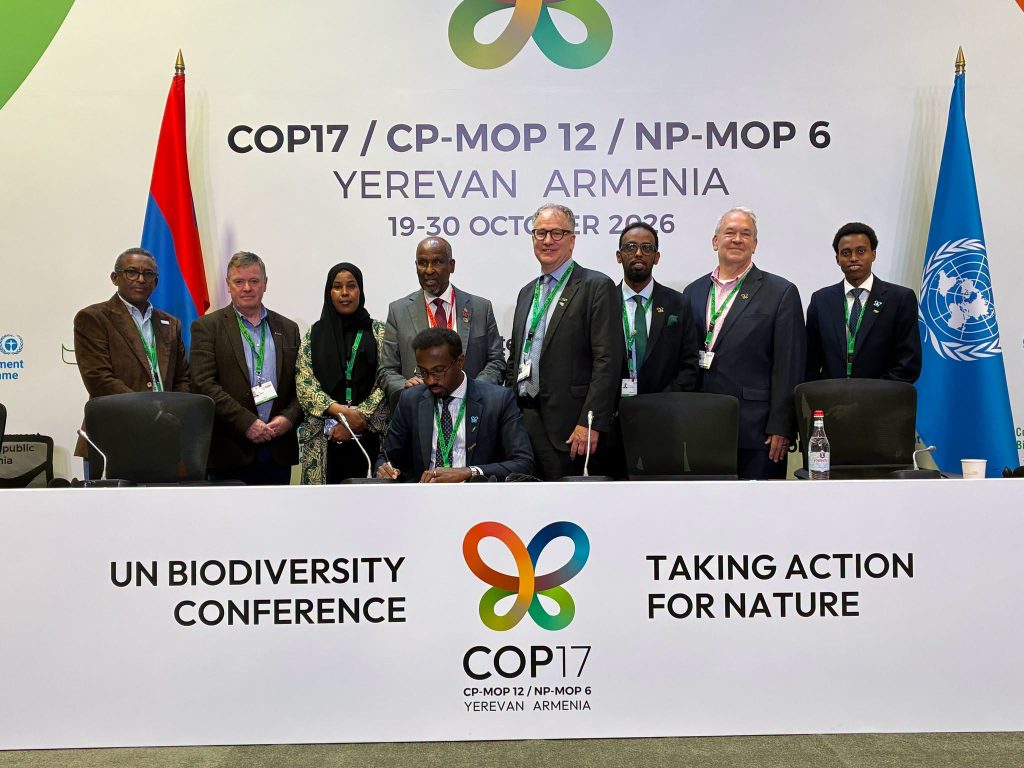
The Federal Republic of Somalia has joined GBIF as a Voting Participant with the signing of the GBIF Memorandum of Understanding at the Convention on Biological Diversity’s COP17 meeting in Yerevan, Armenia. Abdirashid Artan, Director of Biodiversity, Wildlife and Forestry at the Ministry of Environment and Climate Change, joined GBIF Executive Secretary Joe Miller at a ceremony marking the country’s new commitments within the GBIF network.
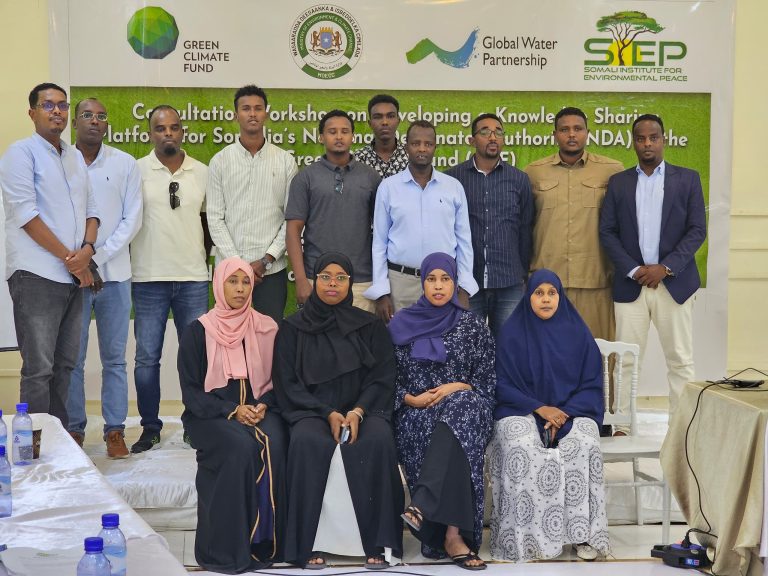
Somalia’s participation builds on ongoing efforts to improve availability of and access to data on the country’s biological diversity. The Somali Institute for Environmental Peace (SIEP) is currently leading a project supported by the EU-funded Biodiversity Information for Development (BID) programme. By standardizing and publishing data from Somali institutions, this project aims to address a critical gap in national and regional biodiversity information for researchers and policymakers alike.
“Joining GBIF marks an important milestone in Somalia’s commitment to strengthening biodiversity conservation, scientific research, and evidence-based environmental decision-making,” said Artan. “Our partnership will promote greater data accessibility, improved institutional and technical capacity, and wider scientific collaboration between Somali and international researchers. This cooperation will also play a vital role in supporting implementation of Somalia’s National Biodiversity Strategy and Action Plan, advancing our national conservation priorities and contributing to the goals of the Kunming–Montreal Global Biodiversity Framework.”
Somalia’s prominent coastline—the longest and easternmost on the African continent—spans more than 3,300 kilometres along the Gulf of Aden and the Indian Ocean. The country shares land borders with Ethiopia and Djibouti to the north and west and Kenya to the south. The arid and semi-arid ecosystems of Somalia support more than 500 endemic species, and the country is an important stop for migratory birds on Asian-East African flyway. However, this rich biodiversity faces threats from habitat loss and degradation, with species in the country’s northern ranges particularly in decline due to its unsustainable agricultural land use.
Two national institutions already publish data through GBIF:
- SIEP, which has already produced a national checklist of the birds of Somalia through its BID project
- the University of Hargeisa, which published two datasets of its herbarium and zoology collections with the help of GBIF community members including associate participant Symbiota Support Hub and botanist/curator Mary Barkworth
“We’re delighted to welcome Somalia to the GBIF network, as national participation is a key step towards making biodiversity data more accessible and strengthening the evidence base conservation action and national reporting,” said Miller. “Somalia’s presence in GBIF increases the voices calling to take action for nature and support for biodiversity protection across the continent.”
The entry of Somalia into the GBIF network strengthens participation in East Africa, as they join a group of six national participants—Burundi, Ethiopia, Madagascar, Malawi, South Sudan and Tanzania—alongside one organizational associate participant, the Horn of Africa Regional Environmental Centre and Network.
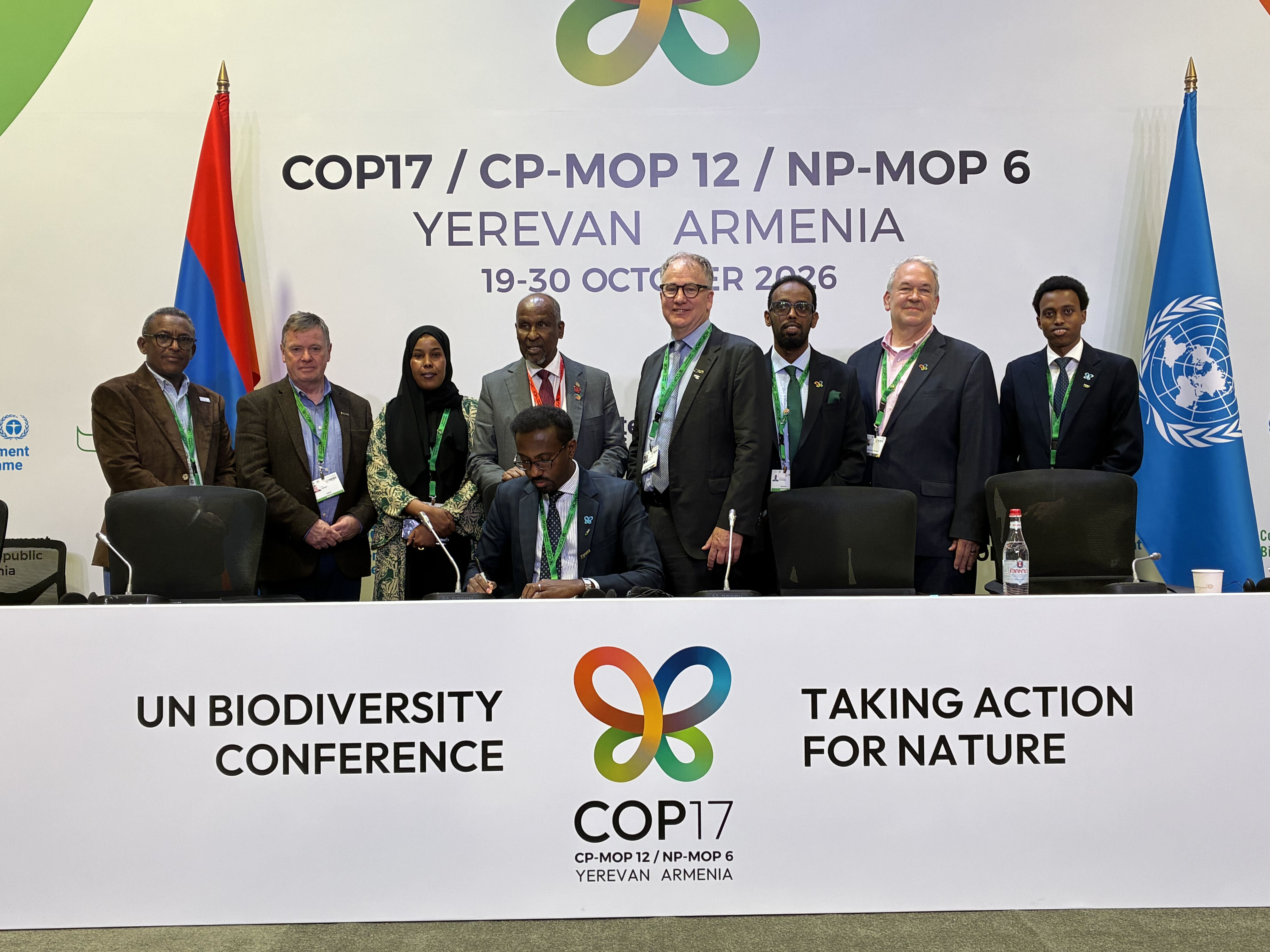
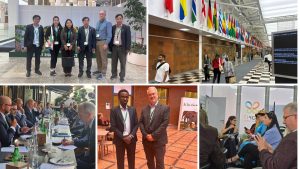
Abdirashid Artan, Director of Biodiversity, Forests and Wildlife, signing the GBIF Memorandum of Understanding on behalf of Ministry of Environment and Climate Change (MOECC) Federal Republic of Somalia joined by His Excellency Special Advisor Abdullahi Godah Barre, GBIF executive secretary Joe Miller, former GBIF governing board chair Liam Lysaght, and members of the Somalia and GBIF delegations to COP17, Yerevan, Armenia, 27 October 2026.